
丨
Phone: +86-139-2823-3177
Views: 0 Author: Site Editor Publish Time: 2026-03-17 Origin: Site


Fleet operators often discover that passenger comfort complaints rarely come from small issues—they come from cooling systems that cannot handle real operating conditions. When evaluating a rooftop bus air conditioner, one of the most common questions is whether an electric unit or a diesel or engine-driven system is the better fit. Both options can deliver strong cooling performance, but they operate differently and suit different fleet environments. Understanding those differences helps transport operators avoid costly mismatches between vehicle platform, power system, and cooling demand.
FOSHAN SHUNDE TAICHANG VEHICLE TECHNOLOGY CO., LTD., known internationally as TCHAIN Co., Ltd., has more than 36 years of experience developing bus HVAC solutions. Since its establishment in 1987 in Guangdong, China, the company has focused on designing durable and efficient air conditioning systems for buses worldwide. Today, TCHAIN continues to provide both electric and engine-driven rooftop systems so fleet operators can select solutions that match their operational needs rather than forcing one technology onto every vehicle.
The most fundamental difference between electric and diesel rooftop AC units lies in how the system receives power. Electric rooftop units rely on the vehicle’s electrical system or battery pack. This design is particularly suitable for electric buses or hybrid fleets where the drivetrain already depends on electrical energy.
Diesel or engine-driven rooftop systems, on the other hand, use mechanical power from the engine through compressors and belts. This configuration has been widely used for decades and remains extremely common in traditional bus fleets.
Because of this difference, the entire system architecture changes. Electrical cooling systems integrate closely with power management systems, while engine-driven units integrate more directly with mechanical vehicle components.
Both electric and diesel rooftop units aim to cool the passenger cabin efficiently. However, the way they deliver that cooling differs. Electric units draw energy directly from the vehicle’s electrical infrastructure, while diesel-linked systems depend on engine operation.
This means the operating model of the fleet strongly influences which type performs better. Electric buses often benefit from electric rooftop systems because they maintain consistent cooling regardless of engine speed. Diesel fleets often prefer engine-driven systems because they are simpler to integrate with existing vehicle structures.
Regardless of the power source, rooftop configurations remain one of the most common HVAC layouts for passenger buses. A rooftop system places the cooling components above the passenger cabin, allowing air to circulate more evenly throughout the vehicle.
This layout frees interior space, simplifies airflow distribution, and provides strong cooling coverage across the passenger area. For this reason, rooftop systems continue to dominate in transit buses, shuttle buses, coaches, and other commercial passenger vehicles.
Electric rooftop AC systems are a natural fit for battery-electric buses. These vehicles already operate on electrical power, making it logical to power the air conditioning system the same way. Integration becomes simpler because the system can connect directly to the vehicle’s electrical architecture.
Electric rooftop units also align with zero-emission transport strategies adopted by many cities worldwide. By avoiding mechanical engine connections, these systems help fleets reduce overall environmental impact.
City buses typically operate on routes with frequent stops and predictable driving patterns. Electric rooftop systems perform well in this environment because they can maintain consistent cooling even when the bus is stationary or idling.
Passengers boarding during hot weather benefit from stable cabin temperatures, and drivers can maintain comfort without relying on engine speed to drive the compressor.
Another advantage of electric rooftop units is reduced mechanical noise. Engine-driven compressors may produce additional vibration and sound, while electric systems tend to operate more quietly.
For urban transport operators aiming to improve passenger comfort and public perception, quieter cooling systems can become an important operational advantage.
Many commercial bus fleets continue to operate diesel vehicles. For these fleets, engine-driven rooftop AC systems remain practical and cost-effective because they align with existing vehicle design and maintenance expertise.
Technicians already understand mechanical compressor systems, spare parts are widely available, and integration with the vehicle engine is straightforward.
Long-distance coaches and buses that operate across varied routes may benefit from engine-driven rooftop systems. These vehicles often run continuously for extended periods, making mechanical compressor operation reliable and predictable.
Because the engine is always running during long-distance travel, the air conditioning system can deliver steady cooling without complex electrical integration.
For fleets upgrading or replacing existing cooling systems, engine-driven rooftop units can simplify installation. Retrofitting electric AC systems may require significant electrical upgrades, while mechanical systems often fit more easily into traditional diesel vehicles.
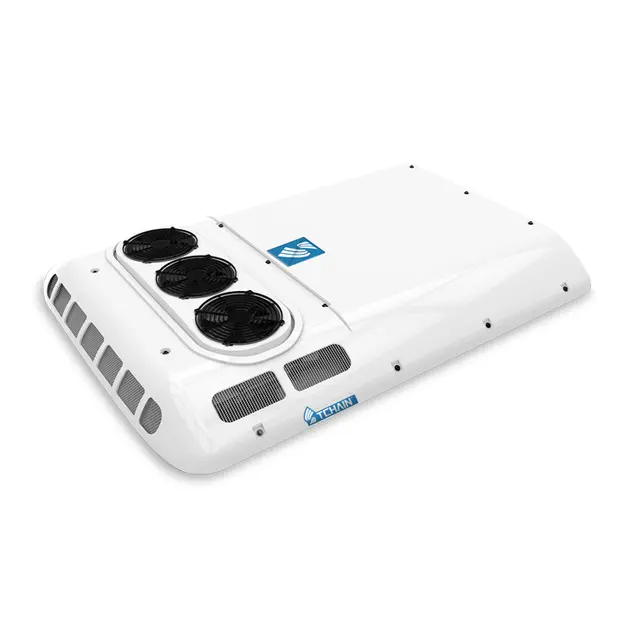
Understanding the practical differences between electric and diesel rooftop AC units helps fleet managers make more confident decisions.
Comparison Item | Electric Rooftop Unit | Diesel / Engine-Driven Rooftop Unit | Best Fit |
Cooling consistency | Stable output independent of engine speed | Output tied to engine operation | Depends on vehicle type |
Energy source | Electrical power or battery | Mechanical engine power | Fleet energy structure |
Installation complexity | May require electrical integration | Simpler for diesel vehicles | Existing fleet design |
Maintenance style | Electrical system servicing | Mechanical compressor servicing | Technician expertise |
Environmental impact | Lower emissions for electric fleets | Higher emissions due to engine link | Green transport strategies |
Both system types can deliver strong cooling when properly designed. The key difference lies in how the cooling output is generated and controlled.
Electric systems maintain stable compressor speed, while engine-driven units depend on engine performance.
Energy consumption patterns vary depending on vehicle design. Electric buses may see greater efficiency with electric AC systems, while diesel buses may maintain efficiency using engine-driven compressors.
Service accessibility also plays a role. Mechanical systems rely on familiar components, while electric systems integrate electronic controls and advanced power management.
Purchase price alone rarely determines the best option. Long-term energy use, maintenance requirements, and reliability often have greater financial impact over the life of the vehicle.
Cooling systems draw significant power, especially during peak summer conditions. Electric buses must ensure their power systems can support HVAC operation without compromising driving range.
An incorrectly matched AC system can cause frequent breakdowns or insufficient cooling. Downtime in passenger transport operations often leads to higher costs than the equipment itself.
Buses operating in extremely hot climates require higher cooling capacity and stronger airflow distribution. Route length and passenger turnover also influence system selection.
Maintenance teams must understand the technology installed on their fleet. Electric systems require electrical expertise, while mechanical systems require compressor and belt maintenance knowledge.
Electric rooftop units often perform well in urban environments where vehicles operate on short routes and frequent stops.
Both electric and engine-driven systems may work effectively depending on vehicle platform and operational schedule.
Long-distance coaches often continue to rely on engine-driven rooftop systems due to predictable engine operation and established maintenance practices.
Many transport operators now run mixed fleets containing diesel and electric buses. Having access to both electric and engine-driven rooftop AC solutions allows operators to standardize comfort across different vehicle types.
Rooftop systems free up valuable interior space, allowing designers to optimize passenger seating and interior layout.
Because rooftop units deliver air through ceiling vents, airflow spreads more evenly throughout the cabin. Passengers seated in different areas experience more consistent cooling.
Passenger buses require reliable cooling across a large interior space. Rooftop systems achieve this by combining strong airflow, efficient heat exchange, and strategic placement above the cabin.
For these reasons, rooftop air conditioning continues to be the dominant HVAC solution for commercial passenger buses.
Selecting between electric and diesel systems is not about choosing the newest technology or following industry trends. The right decision depends on vehicle design, route structure, maintenance capability, and long-term operating cost. For fleet operators evaluating a bus cooling solution, matching the HVAC system to the vehicle platform ensures reliable passenger comfort and efficient fleet performance.
With more than three decades of industry experience, TCHAIN Co., Ltd. has developed a wide range of bus air conditioning systems to support different fleet environments. From engine-driven rooftop units for traditional buses to advanced electric cooling solutions for modern electric vehicles, the company focuses on delivering reliable climate control for passenger transport worldwide. Transport operators searching for a dependable bus rooftop air conditioning system can explore the solutions developed by TCHAIN to support long-term fleet operation. If your fleet is evaluating new cooling systems or planning upgrades, contact us to learn more about available configurations and technical support.
Electric rooftop systems use electrical power from the vehicle, while diesel systems rely on engine-driven compressors. The best choice depends on whether the fleet operates electric or diesel buses.
Electric units can be highly efficient for battery-electric buses because they integrate directly with the vehicle power system. Efficiency depends on the vehicle design and route conditions.
Diesel systems involve mechanical components such as compressors and belts, which require periodic inspection and maintenance. However, many fleets already have technicians experienced with these systems.
Rooftop systems provide better airflow distribution, save interior space, and deliver strong cooling across the passenger cabin, making them ideal for commercial passenger vehicles.


