
丨
Phone: +86-139-2823-3177
Views: 0 Author: Site Editor Publish Time: 2026-03-31 Origin: Site


Bus manufacturers and fleet operators often face an important design question during vehicle configuration: should the air conditioning system be mounted on the roof or integrated into the dashboard area? This decision influences not only cooling performance but also passenger comfort, maintenance efficiency, and interior layout. Many modern buses rely on a rooftop bus air conditioner because it allows the cooling system to distribute air across the entire cabin rather than focusing only on the driver’s area. Understanding the differences between rooftop-mounted systems and in-dash bus air conditioning solutions helps fleet managers make better decisions when selecting equipment for commercial transportation vehicles.
FOSHAN SHUNDE TAICHANG VEHICLE TECHNOLOGY CO., LTD., widely known as TCHAIN Co., Ltd., has been designing bus climate control systems since 1987. With more than 36 years of experience manufacturing HVAC solutions for passenger transportation, the company provides rooftop air conditioning systems for city buses, coaches, shuttle buses, and other commercial vehicles. By examining how rooftop and in-dash systems differ in real operating conditions, operators can determine which solution best supports long-term fleet performance.
Rooftop-mounted bus air conditioning systems are designed to cool the entire passenger cabin. The system is installed on the roof of the vehicle, allowing cooled air to flow downward through vents or air ducts that distribute airflow across the seating area.
Because the cooling unit is positioned above the cabin, it can circulate air more evenly throughout the interior. This design allows passengers seated at different locations to experience consistent cooling conditions.
For public transportation vehicles where passenger comfort is essential, whole-cabin cooling is often the most effective approach.
In-dash air conditioning systems are installed within the front dashboard area of the vehicle. These systems are typically designed to provide cooling for the driver’s space and nearby front cabin area.
Because airflow originates from the front of the bus, the cooling effect becomes weaker toward the rear seating area. This limitation makes in-dash systems more suitable for smaller vehicles or situations where cooling demand is concentrated near the driver.
Choosing between rooftop-mounted and in-dash systems is not simply a technical decision. It depends heavily on how the bus will be used.
Vehicles designed for transporting large numbers of passengers generally require cooling coverage across the entire cabin. Smaller vehicles or specialized transport applications may have different priorities.
Understanding the operational purpose of the vehicle helps determine which HVAC layout is most suitable.
One of the primary advantages of rooftop-mounted air conditioning systems is the efficient use of interior space. Because the system is located on the roof, valuable cabin space remains available for passenger seating and interior design.
Commercial buses must maximize passenger capacity while maintaining comfort. Installing the cooling system on the roof helps preserve the usable interior space inside the vehicle.
Passenger comfort requires consistent airflow throughout the cabin. Rooftop systems deliver cooled air from above, allowing airflow to spread naturally across the interior.
This design reduces temperature differences between the front and rear seating areas. As a result, passengers throughout the vehicle experience more consistent cooling.
City buses, shuttle buses, and intercity coaches all carry multiple passengers simultaneously. These vehicles require strong and evenly distributed cooling performance.
Rooftop-mounted HVAC systems are particularly effective for these vehicle types because they can handle larger cabin volumes and higher passenger loads.
For this reason, rooftop air conditioning has become a common configuration in modern passenger buses.
Cooling coverage is one of the most important differences between the two system types. Rooftop systems distribute air from above, allowing it to reach both front and rear seating areas.
In-dash systems primarily cool the front section of the vehicle. As airflow travels toward the back, the cooling effect may weaken.
Rooftop systems require roof installation space but leave the interior cabin free of large HVAC components. This allows designers to arrange seating and interior equipment more efficiently.
In-dash systems occupy dashboard and front cabin space. While this layout may be suitable for smaller vehicles, it can limit design flexibility in larger buses.
Technicians often find rooftop systems easier to access during maintenance because major components are concentrated in a single rooftop unit.
In-dash systems may require technicians to access components within the front interior structure of the vehicle, which can make servicing more complex.
Rooftop units simplify airflow design because cooled air can travel downward and spread evenly throughout the cabin. This improves overall climate consistency.
In-dash systems rely on forward airflow, which may create uneven temperature distribution inside the vehicle.
Comparison Factor | Rooftop-Mounted System | In-Dash System | Which One Usually Wins |
Cooling coverage | Whole cabin airflow | Mostly front cabin | Rooftop system |
Interior space usage | Frees cabin space | Uses dashboard area | Rooftop system |
Maintenance access | Centralized rooftop access | Interior component access | Rooftop system |
Installation complexity | Requires roof structure support | Simpler for small vehicles | Depends on vehicle |
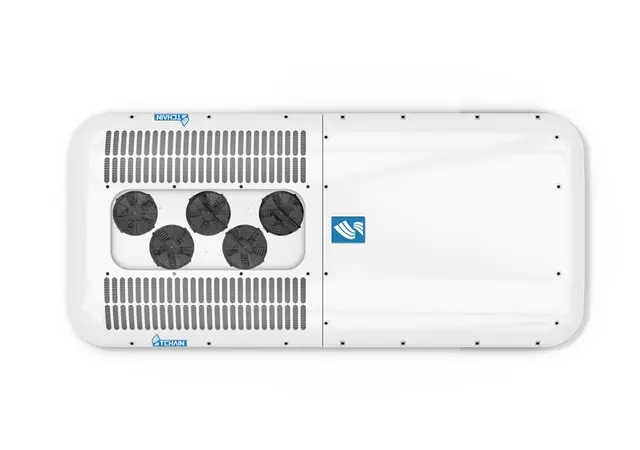
Passenger satisfaction depends on consistent cooling throughout the entire cabin. When temperatures vary significantly between the front and rear sections of a bus, passengers often experience discomfort.
Rooftop systems address this challenge by distributing airflow evenly across the entire seating area.
Because rooftop systems are mounted above the vehicle, the dashboard area remains uncluttered. This allows bus manufacturers to design driver workspaces more efficiently.
Additional dashboard space can also accommodate vehicle electronics, navigation systems, and monitoring equipment.
Commercial buses often include multiple systems such as lighting, ticketing equipment, and communication devices. Rooftop HVAC units simplify integration because they operate independently of interior dashboard structures.
This approach helps maintain a cleaner and more organized vehicle layout.
Large transportation fleets prefer standardized equipment whenever possible. Using the same type of rooftop air conditioning system across multiple buses simplifies spare parts management and technician training.
Standardization also improves maintenance efficiency because technicians become familiar with a consistent system design.
In-dash systems can provide effective cooling for the driver’s workspace. In certain vehicle designs where the driver requires strong localized cooling, these systems remain useful.
Smaller buses or specialty vehicles may not have sufficient roof space to install large rooftop HVAC units. In these situations, in-dash systems may provide a practical alternative.
In some vehicle configurations, in-dash air conditioning systems serve as supplementary cooling solutions rather than the primary HVAC system.
For example, a vehicle may use a rooftop system for passenger cooling while maintaining a separate driver-focused air conditioning unit in the dashboard area.
The vehicle roof must be able to support the weight of the air conditioning system. Engineers must evaluate structural strength and mounting points before installation.
Proper structural support ensures long-term reliability and safety.
Rooftop systems increase the overall height of the vehicle. Fleet operators should ensure that buses can still safely pass under bridges, tunnels, and infrastructure along their routes.
Easy maintenance access improves long-term reliability. Rooftop systems should allow technicians to inspect and service components efficiently.
Planning maintenance access during the design stage simplifies servicing later.
Cooling capacity must match the size of the passenger cabin and expected operating conditions. A properly sized system maintains stable cabin temperature even during peak passenger loads.
Selecting the correct capacity ensures reliable performance during daily operation.
Transport companies operating mixed fleets often prefer standardized HVAC solutions. Rooftop systems can often be adapted to different bus models while maintaining consistent design principles.
Standardization simplifies maintenance and spare parts logistics.
Passenger satisfaction depends on comfort throughout the entire journey. Whole-cabin cooling ensures that passengers seated anywhere in the bus experience similar temperature conditions.
Rooftop systems support this goal by distributing cooled air evenly across the passenger area.
Public transportation vehicles operate continuously under demanding conditions. HVAC systems must provide reliable cooling while remaining easy to maintain.
For many fleet operators, rooftop air conditioning systems offer the balance of performance, reliability, and service accessibility required for long-term operation.
The decision between rooftop-mounted and in-dash air conditioning systems ultimately depends on vehicle design and operational needs. For most passenger buses where whole-cabin comfort is essential, rooftop-mounted HVAC systems often provide stronger airflow distribution, improved space utilization, and easier maintenance access. However, each vehicle type has unique requirements, and the best solution is one that matches the intended application and operating environment.
With more than three decades of experience in bus climate control engineering, TCHAIN Co., Ltd. continues to develop HVAC technologies designed specifically for commercial passenger transportation. From rooftop cooling systems to specialized bus climate solutions, the company focuses on providing reliable equipment that supports efficient fleet operation. Transport operators seeking dependable bus rooftop cooling units for their vehicles are welcome to contact us to learn more about available models, technical support, and system integration options.
Rooftop systems provide better airflow distribution across the passenger cabin and free interior space for seating and equipment.
No. In many cases rooftop units are easier to access because key components are located together on the roof rather than inside the dashboard area.
Yes. Some buses combine both systems, using rooftop cooling for passengers and in-dash cooling for the driver’s workspace.
Rooftop units slightly increase vehicle height, so route clearance and infrastructure limitations should be considered when selecting equipment


