
丨
Phone: +86-139-2823-3177
Views: 0 Author: Site Editor Publish Time: 2026-03-24 Origin: Site


Cooling capacity numbers often look impressive on specification sheets, yet those figures alone rarely explain how quickly a bus can become comfortable for passengers after starting the air conditioner. What truly matters in daily operation is how fast the cabin temperature drops from a hot starting condition to a comfortable level. That is why engineers frequently evaluate a rooftop bus air conditioner using a method known as the pull-down test. This practical test measures how quickly the system can remove heat from the passenger cabin under controlled conditions.
FOSHAN SHUNDE TAICHANG VEHICLE TECHNOLOGY CO., LTD., known internationally as TCHAIN Co., Ltd., has more than 36 years of experience developing air conditioning systems for buses and commercial vehicles. Since its establishment in 1987 in Guangdong, China, the company has focused on designing reliable climate control solutions that perform consistently in real transportation environments. Understanding how pull-down tests work helps fleet operators evaluate whether a rooftop cooling system can deliver dependable passenger comfort during real-world operation.
A pull-down test is a performance evaluation used to determine how quickly an air conditioning system can lower the temperature inside a bus cabin. Instead of measuring only theoretical cooling capacity, the test focuses on the time required to reduce the interior temperature from a hot starting point to a comfortable level.
During the test, engineers start with a heated cabin that simulates conditions commonly experienced when a bus has been parked under direct sunlight. The air conditioning system is then activated, and temperature sensors record how rapidly the cabin temperature drops.
The result shows whether the cooling system can quickly bring passengers into a comfortable environment after the bus begins operation.
The purpose of a pull-down test is to demonstrate real cooling effectiveness rather than theoretical performance. Even if two systems share similar rated cooling capacity, their ability to remove heat from the cabin may differ significantly.
Factors such as airflow distribution, compressor efficiency, heat exchanger performance, and vehicle insulation all influence the outcome. The pull-down test therefore reveals how the entire system performs together rather than evaluating individual components separately.
Passenger experience depends heavily on cooling speed. When a bus begins service during a hot day, passengers expect the cabin to become comfortable quickly. If the cooling system requires excessive time to reduce cabin temperature, passengers may experience discomfort and operators may receive complaints.
For this reason, cooling speed becomes a critical measure of overall air conditioning performance.
Buses frequently begin their routes after sitting in open parking areas where sunlight increases the interior temperature. A pull-down test evaluates whether the system can remove this accumulated heat quickly.
A strong rooftop cooling system should reduce cabin temperature rapidly even when starting conditions are extremely hot.
Fleet operators depend on reliable temperature control throughout daily operations. When a bus enters service, the air conditioning system must immediately begin reducing cabin heat.
Pull-down testing provides a realistic measurement of how the system behaves during this critical moment.
Selecting an air conditioning system based solely on specification sheets can be misleading. Pull-down test data provides measurable evidence of performance under realistic conditions.
Fleet managers can use these results to compare different systems objectively and choose equipment that meets operational requirements.
The test usually begins by heating the bus interior to simulate high-temperature conditions. Engineers may park the vehicle in sunlight or use heating equipment to raise the cabin temperature to a predetermined level.
Temperature sensors are then placed in different areas of the cabin to monitor how cooling spreads throughout the passenger space.
Before starting the test, technicians confirm that environmental conditions remain stable. Ambient temperature, humidity, and starting cabin temperature must be recorded accurately.
These measurements ensure that the results reflect realistic operating conditions.
Once preparation is complete, the air conditioning system is turned on at full operation. Sensors continuously record temperature changes inside the cabin.
Engineers then analyze how long it takes for the cabin temperature to reach the target comfort range.
Consistency is essential when comparing pull-down test results. If test conditions vary significantly, the results may not represent true performance differences.
For this reason, engineers follow strict procedures to maintain consistent conditions during each evaluation.
The most commonly measured indicator is the time required to reduce cabin temperature to a specific comfort level. Shorter pull-down times indicate stronger cooling performance.
Engineers also compare the temperature of air leaving the vents with the average cabin temperature. This comparison reveals how efficiently cooled air spreads throughout the passenger area.
Environmental conditions influence cooling performance significantly. High humidity and high outdoor temperatures increase the difficulty of reducing cabin heat.
Some tests simulate passenger load by adding heat sources inside the cabin.
A single measurement rarely tells the full story. Effective evaluation requires analyzing several indicators together, including cooling speed, airflow distribution, and temperature stability.
Test Metric | What It Tells You | Why Buyers Should Care | Typical Interpretation |
Pull-down time | Speed of cabin cooling | Determines passenger comfort after start-up | Shorter time indicates stronger performance |
Supply air temperature | Cooling efficiency of evaporator | Indicates system efficiency | Lower supply temperature improves cooling |
Cabin average temperature | Overall passenger comfort | Shows airflow distribution effectiveness | Uniform temperature suggests balanced airflow |
Ambient conditions | Environmental difficulty level | Ensures fair comparison | Higher ambient temperature increases test difficulty |
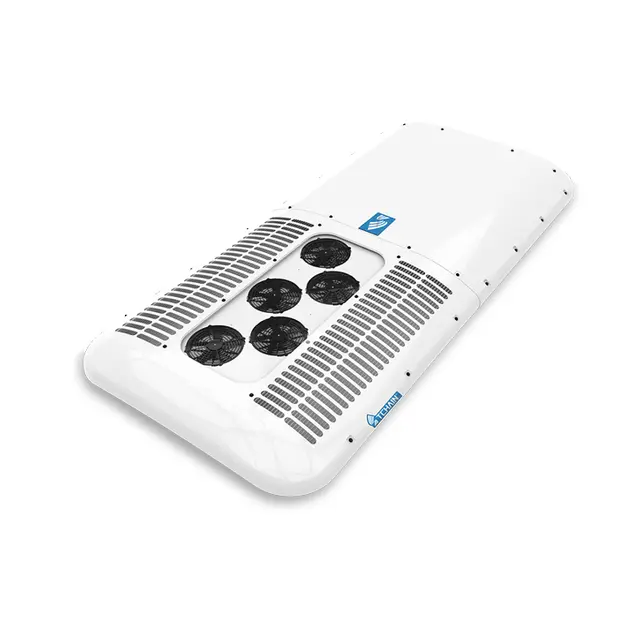
Vehicle insulation significantly influences cooling performance. Buses with large windows or poor insulation allow more heat to enter the cabin.
Even a powerful cooling system may struggle if the vehicle structure permits excessive heat gain.
Frequent door openings allow outside heat to enter the cabin repeatedly. This factor is especially important for urban buses operating with frequent stops.
Air leakage around doors or windows can also increase cooling demand.
Airflow design determines how effectively cooled air spreads throughout the passenger compartment. Ceiling ducts, vent placement, and fan power all influence this distribution.
Even strong cooling capacity may produce uneven cabin temperatures if airflow design is poor.
Larger buses naturally contain more air volume and therefore require greater cooling power. Passenger density also contributes to heat accumulation.
These factors must be considered when interpreting test results.
Results obtained under different environmental conditions cannot be compared directly. Ambient temperature, humidity, and starting cabin temperature must be similar to ensure fair comparison.
If one test begins with a higher starting temperature than another, the cooling time may appear longer even if the system performance is strong.
Understanding the initial conditions is essential for accurate interpretation.
Fast initial cooling does not necessarily guarantee stable temperature control during long operation. Both cooling speed and temperature stability must be evaluated together.
Even when pull-down time appears acceptable, poor airflow distribution may create uneven cooling in different seating areas.
Passengers sitting far from vents may still feel uncomfortable.
Fleet managers can compare pull-down test results when evaluating cooling systems for new buses. Faster cooling times may provide advantages in urban operations where buses frequently begin routes after parking.
Many transport authorities include performance tests in procurement requirements. Pull-down test results provide measurable data that helps decision-makers evaluate equipment objectively.
Buyers can ask suppliers to provide pull-down performance data or testing results. Understanding how the system behaves during hot start conditions helps buyers make confident decisions.
Reliable manufacturers typically conduct performance testing to verify that their products meet real operating requirements.
Pull-down testing is not merely a laboratory measurement. It is a practical method used to evaluate how quickly a bus air conditioning system can transform a hot cabin into a comfortable passenger environment. For fleet operators investing in cooling equipment, understanding these tests provides valuable insight into real performance rather than theoretical specifications.
TCHAIN Co., Ltd., with more than three decades of experience in bus climate control technology, continues to develop HVAC systems designed for reliable operation in demanding transportation environments. From rooftop cooling units to advanced electric bus HVAC solutions, the company focuses on delivering systems capable of maintaining passenger comfort in real operating conditions. Transport operators seeking dependable bus rooftop cooling systems can contact us to learn more about available products and technical support for upcoming fleet projects.
A pull-down test measures how quickly the air conditioning system can reduce the cabin temperature from a hot starting condition to a comfortable level.
Fast pull-down performance ensures passengers experience comfortable temperatures soon after the bus begins operation.
Yes. Airflow design, compressor efficiency, and vehicle insulation can cause significant differences in cooling speed.
Buyers can compare cooling speed and temperature stability between systems to determine which solution will provide the most reliable passenger comfort.


