
丨
Phone: +86-139-2823-3177
Choosing the right RV air conditioner can make or break your comfort on the road. Have you ever struggled with heat during your RV trip?
In this article, we’ll discuss how to choose the best RV air conditioner for your vehicle. You’ll learn what features matter most, how to assess your cooling needs, and the best options available for your RV.
Before selecting the best RV air conditioner, it’s crucial to understand your specific cooling needs. The most important factor in this is the BTU capacity required for your RV. The cooling capacity, measured in BTUs (British Thermal Units), indicates how much heat an air conditioner can remove from the space in one hour.
● For smaller RVs, a unit with a 13,500 BTU rating might be sufficient.
● Larger RVs or those used in hotter climates may require an air conditioner with a 15,000 to 20,000 BTU capacity.
The size of your RV, the climate you travel in, and your typical camping conditions all influence the amount of cooling power you need. For example, if you camp in areas with high humidity or intense heat, a higher BTU model is recommended.
Tip: Use an online BTU calculator to estimate the required cooling power for your RV based on its size and climate.
There are two main types of RV air conditioners to consider:
● Rooftop Air Conditioners: These are the most common in RVs and are installed on the roof of the vehicle. They save interior space and are designed to cool large areas efficiently.
● Undermount or Basement Air Conditioners: These are installed under the vehicle, offering quieter operation and better aerodynamics. They’re ideal for those who prefer to maintain a sleek roofline or need more headroom inside.
Each type has its advantages and should be chosen based on your RV's layout and your cooling needs.
When selecting an RV air conditioner, energy efficiency should be a top priority. Not only does an energy-efficient model help lower your power consumption, but it also reduces the load on your vehicle’s electrical system. Look for inverter-based or variable-speed models. These units adjust the compressor’s speed based on cooling demand, consuming less energy than traditional models.
Modern air conditioners come with high EER (Energy Efficiency Ratio) ratings. A higher EER means the unit uses less energy to cool the same amount of space. For longer RV trips or off-grid camping, choosing an energy-efficient model is essential to avoid depleting your power reserves quickly.
Noise level is another key consideration, especially if you plan to use your RV air conditioner during the night. Many air conditioners can produce a significant amount of noise, which can be disruptive while trying to sleep.
● Dual-fan systems tend to be quieter, with the air conditioning system working at a lower RPM.
● Models with smart controls can adjust the fan speed based on temperature, reducing unnecessary noise when the space reaches a comfortable level.
Check product specifications for noise ratings and look for reviews that mention the quietness of the unit.
Tip: Opt for a unit specifically designed for quiet operation if you value peace during your camping trips.
The ease of installation and ongoing maintenance is essential when choosing an RV air conditioner. Rooftop units can be complex to install and may require professional help, especially if you need to modify the roof of your RV. On the other hand, undermount units are generally easier to install, as they don’t require roof modifications.
Maintenance for RV air conditioners is also crucial. Look for models that have removable filters for easy cleaning and self-diagnosing functions to alert you when something’s wrong. Routine maintenance helps extend the lifespan of your unit and ensures optimal performance.
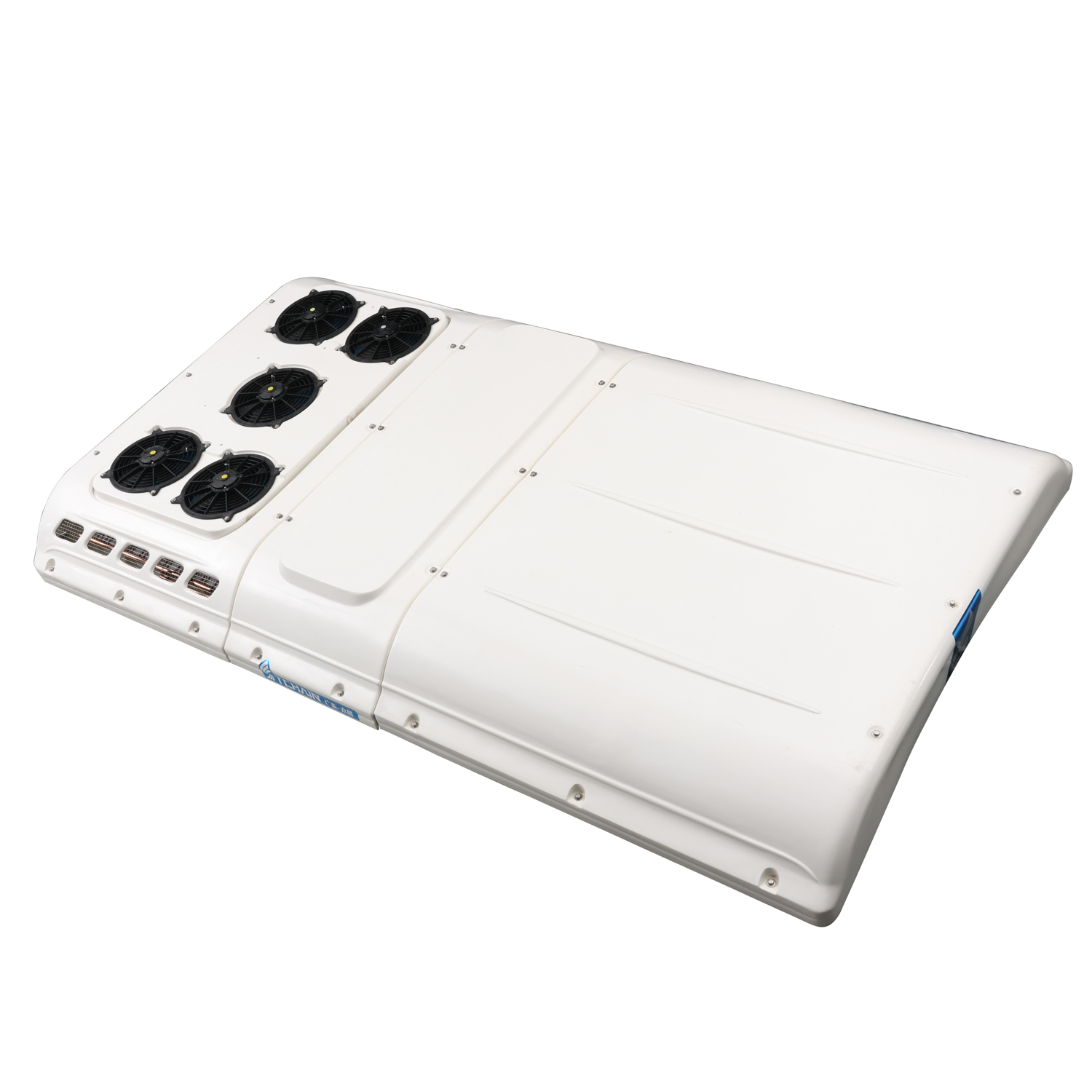
Many modern RV air conditioners come equipped with smart features. These include remote control access, mobile app compatibility, and even Wi-Fi-enabled thermostats. These smart features allow you to control the temperature remotely, ensuring that your RV is cool and comfortable when you arrive. Some units even integrate with your RV’s control hub, enabling seamless temperature management from a single device.
Some RV air conditioners come with heat pump features, allowing you to use the system for both cooling and heating. Heat pumps are especially useful for year-round RVers who experience a variety of weather conditions. They provide light heating during colder months without the need for a separate heating system.
Tip: If you frequently camp in cooler climates, consider an RV air conditioner with a heat pump for year-round comfort.
Choosing the correct BTU rating is one of the most important steps in selecting an RV air conditioner. An air conditioner that is too weak will fail to cool the space effectively, while one that is too powerful can consume excessive energy.
For smaller RVs (under 20 feet), 13,500 BTU is usually sufficient. For larger RVs or those in hot climates, consider a 15,000 to 20,000 BTU unit. If your RV has multiple rooms or zones, dual AC units may be required to maintain an even temperature throughout.
When deciding on a system, consider whether you need a single-zone or multi-zone system.
● Single-zone systems are typically sufficient for smaller RVs, where one unit can cool the entire space.
● Multi-zone systems are ideal for larger RVs with multiple rooms, as they allow for different temperature settings in different areas.
Tip: For larger RVs or families with different temperature preferences, multi-zone systems offer better control and comfort.
While higher BTU or more energy-efficient units might have a higher upfront cost, they can save you money in the long run through lower energy bills and fuel savings. For example, energy-efficient units can reduce the load on your generator or shore power, making it easier to keep your RV cool without using excessive energy.
Choosing an air conditioner that requires less maintenance and has a longer lifespan also adds value over time. For long-term investments, consider how the RV air conditioner can reduce both immediate costs and ongoing operational expenses.
A good warranty ensures peace of mind. Choose an RV air conditioner with a solid warranty and responsive customer support. This can save you money on repairs and provide assistance when needed. A reliable warranty indicates that the manufacturer stands behind their product.
Tip: Look for RV air conditioners with a minimum of 1 to 2 years warranty. Extended warranties are a good sign of product reliability.
To make the process of choosing the right RV air conditioner easier, here’s a table that helps you match the size of your RV to the appropriate BTU capacity:
RV Size | Recommended BTU |
12-16 feet | 8,000 - 10,000 BTU |
16-24 feet | 13,500 BTU |
24+ feet | 15,000 - 20,000 BTU |
Multiple Zones | Dual 15,000+ BTU |
Choosing the right RV air conditioner ensures comfort on the road, balancing cooling power and energy efficiency. Consider the BTU capacity, noise level, and installation needs when selecting a unit. For reliable and high-performance options, FOSHAN SHUNDE TAICHANG VEHICLE TECHNOLOGY CO., LTD. provides RV air conditioners that offer superior cooling efficiency, energy savings, and quiet operation, ideal for enhancing your RV experience.
A: An RV air conditioner is a cooling system designed specifically for RVs, using either a rooftop or bottom-mounted unit to cool the vehicle while stationary or on the road.
A: When choosing an RV air conditioner, consider factors like BTU capacity, energy efficiency, noise level, and whether you need cooling or heating capabilities. Larger RVs typically require more powerful units.
A: The run time of an RV air conditioner depends on the battery capacity and the AC’s power consumption. Typically, modern energy-efficient models can run for several hours on a full charge.
A: The cost of an RV air conditioner varies, with prices typically ranging from $500 to $1,500, depending on the model's features, BTU capacity, and installation requirements.
A: Energy-efficient RV air conditioners consume less power, extend battery life, and reduce fuel consumption, making them ideal for long trips or off-grid camping.


